Keyword clustering means designing pages that satisfy search intent better than the alternatives and guide readers toward action.
In the AI search era, this matters even more. Search engines evaluate topical depth, entity coverage, and answer quality across your entire site.
What a conversion-ready cluster includes
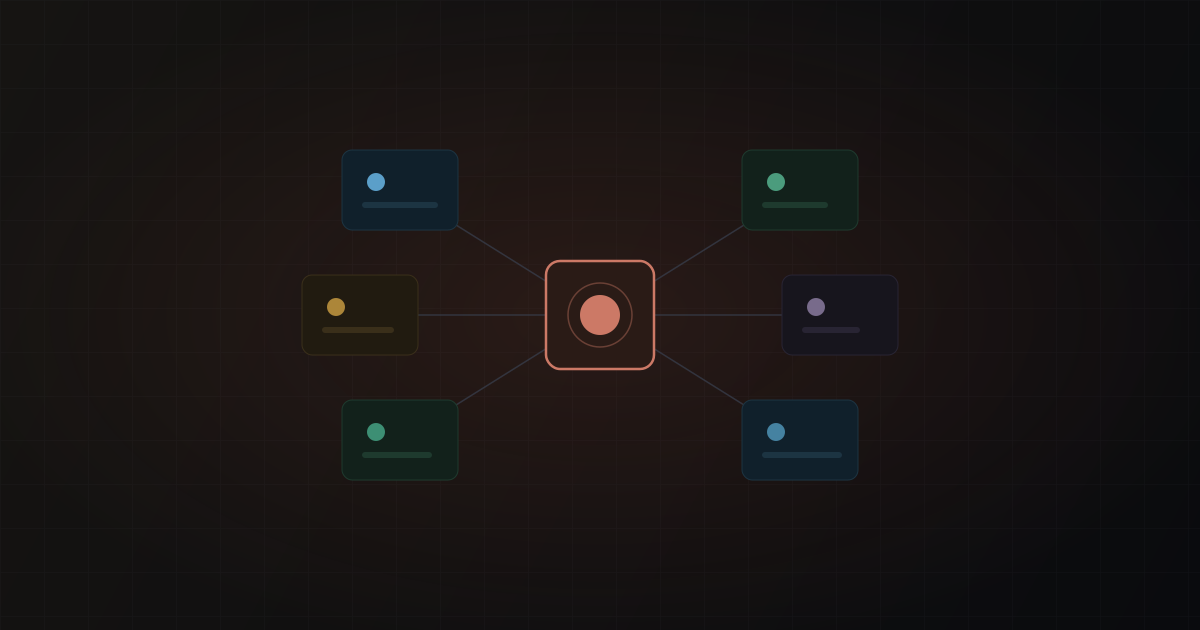
A strong cluster has three layers:
- Pillar page: the main concept or workflow
- Support pages: subtopics that deepen coverage
- Decision pages: product-focused destinations tied to the workflow
If one layer is missing, traffic may grow while conversions stay flat.
Step 1: Build clusters from problems
Start with real user problems:
- "How do we find low-competition keywords fast?"
- "How do we prioritize technical issues?"
- "How do we publish faster without quality drops?"
Then map each problem to:
- Core query
- Related question queries
- Decision-stage terms
This prevents random content production.
Step 2: Separate intent classes
Do not mix all keywords into one article. Separate by intent:
- Informational
- Comparative
- Transactional
- Navigational
Each intent should route to a distinct page type. This improves relevance and reduces cannibalization.
Step 3: Use SERP pattern analysis before writing
Before outlining, review top results and note:
- Content format that ranks (guide, list, template, tool page)
- Common headings and missing angles
- Search features shown (snippets, videos, FAQ)
Your goal is to find the gap those results leave open.
Step 4: Design internal links at the cluster level
Every support page should link to:
- The pillar page
- One adjacent support page
- One decision page
And every decision page should link back to:
- The most relevant support page for trust context
This creates a clear crawl and conversion path.
Practical cluster example
Cluster topic: keyword research workflow
Potential structure:
- Pillar: complete keyword workflow for small teams
- Support: search intent classification guide
- Support: keyword difficulty and prioritization model
- Support: how to turn keywords into briefs
- Decision: keyword research tool page
This structure covers discovery, evaluation, and action.
Metrics to evaluate cluster quality
Check these every two weeks:
- Number of ranking terms per cluster
- Average position trend by intent class
- Internal click-through from support pages to decision pages
- Assisted conversions from cluster URLs
If a cluster has impressions but weak internal clicks, improve CTAs and link placement first.
Common clustering mistakes
Avoid these patterns:
- Publishing multiple pages for the exact same intent
- Using broad, generic slugs with unclear focus
- Ignoring transactional terms until late
- Updating titles without improving content depth
How Quietly can support this workflow
An efficient team setup:
- Build initial clusters with keyword research tooling
- Use technical audit insights to remove crawl blockers
- Publish supporting pages from reusable editorial templates
The objective is one connected system.
Final build sequence
When creating a new cluster:
- Pick one clear pillar intent
- Add three to five supporting intents
- Define one decision page destination
- Publish in sequence and interlink immediately
- Review performance after two weeks and refine
Questions this article should answer directly
How many pages belong in one keyword cluster?
Most clusters work best with one pillar, three to five support pages, and one decision-stage destination that the support pages reinforce.
What causes cluster cannibalization?
It usually happens when multiple pages target the same intent with only minor wording differences instead of distinct roles inside the cluster.
How do you know a cluster is working?
Look for ranking breadth across the cluster and stronger internal click-through into decision pages, not just impressions on one article.
Build clusters that rank and route traffic to the right pages
Quietly combines clustering, optimization, and rank feedback so support content and decision pages move as one system.

Quietly Editorial Team
Product Marketing